viernes, 31 de enero de 2014

Hannah Valantine, M.D., named NIH’s first Chief Officer for Scientific Workforce Diversity

Hannah Valantine, M.D., named NIH’s first Chief Officer for Scientific Workforce Diversity


Institute/Center

Contact


Hannah Valantine, M.D., named NIH’s first Chief Officer for Scientific Workforce Diversity

Following a nationwide search, National Institutes of Health Director Dr. Francis S. Collins, M.D., Ph.D., has appointed Hannah Valantine, M.D., to the permanent position of Chief Officer for Scientific Workforce Diversity. Dr. Valantine will lead NIH’s effort to diversify the biomedical research workforce by developing a vision and comprehensive strategy to expand recruitment and retention, and promote inclusiveness and equity throughout the biomedical research enterprise. Dr. Valantine is expected to begin her new role this spring.
“Recruiting and retaining the brightest minds regardless of race, ethnicity, gender, disability, and socioeconomic status, is critically important not only to NIH, but to the entire U.S. scientific enterprise,” said Dr. Collins. “Hannah possesses the experience, dedication, and tenacity needed to move NIH forward on this critically important issue.”
The appointment stems from a recommendation by the Biomedical Research Workforce Diversity Working Group of the Advisory Committee to the Director (ACD) that called for a newly created position entirely dedicated to diversity. Dr. Valantine will work closely with the NIH institutes and centers, NIH grantee community, and community stakeholders to ensure engagement on the issue at all levels.
Dr. Valantine comes to the NIH from Stanford University where she served as Senior Associate Dean for Diversity and Leadership at Stanford School of Medicine, and Professor of Cardiovascular Medicine at Stanford University Medical Center. Dr. Valantine studied biochemistry at London University and attended St. George’s Hospital Medical School. She completed her post-graduate work in the field of cardiology at two London hospitals, Brompton and Hammersmith. She moved to the United States to train as a fellow with leading cardiologists and cardiac surgeons, including heart transplant pioneer Norman Shumway, M.D., Ph.D. In addition to a prestigious career in cardiology, Dr. Valantine is a past recipient of the NIH Director’s Pathfinder Award for Diversity in the Scientific Workforce and has a proven record on implementing diversity initiatives in academic medicine.
“I’d like to extend my gratitude to Dr. Roderic Pettigrew, who served as the Acting Chief Officer for Scientific Workforce Diversity while a search was underway,” said Dr. Collins.“Roderic did an incredible job of keeping the initiative moving while continuing to serve as Director of the National Institute on Biomedical Imaging and Bioengineering. His tireless efforts and knowledge on this important topic will make him an essential resource to Hannah.”
About the National Institutes of Health (NIH): NIH, the nation's medical research agency, includes 27 Institutes and Centers and is a component of the U.S. Department of Health and Human Services. NIH is the primary federal agency conducting and supporting basic, clinical, and translational medical research, and is investigating the causes, treatments, and cures for both common and rare diseases. For more information about NIH and its programs, visitwww.nih.gov.
NIH...Turning Discovery Into Health®
###

MMWR Vol. 63 / No. 4

MMWR Vol. 63 / No. 4


Bookmark and Share
MMWR Logo
 
MMWR Weekly
Volume 63, No. 4
January 31, 2014
 
PDF
 

In this Issue

CDC Grand Rounds: Reducing the Burden of HPV-Associated Cancer and Disease
Eileen F. Dunne, MD, Mona Saraiya, MD, Shannon Stokley, MPH, et al.
MMWR 2014;63:69–72

Rapidly Building Global Health Security Capacity — Uganda Demonstration Project, 2013
Jeff N. Borchert, MS, Jordan W. Tappero, MD, Robert Downing, PhD, et el.
MMWR 2014;63:73–6


Prominent upgrades from a global health security project — Uganda

Strengthening Global Health Security Capacity — Vietnam Demonstration Project, 2013
Tran Dac Phu, MD, Vu Ngoc Long, MD, Nguyen Tran Hien, MD, et al.
MMWR 2014;63:77–80

Notes from the Field: Rotavirus Vaccine Administration Errors — United States, 2006–2013
Beth F. Hibbs, MPH, Elaine R. Miller, MPH and Tom Shimabukuro, MD
MMWR 2014;63:81

Errata: Vol. 63, No. 1
MMWR 2014;63:82

Errata: Vol. 63, No. 2
MMWR 2014;63:82

QuickStats: Percentage of Users of Long-Term Care Services with a Diagnosis of Depression, by Provider Type — National Study of Long-Term Care Providers, United States, 2011 and 2012
Vincent Rome, MPH, Manisha Sengupta, PhD, Lauren Harris-Kojetin, PhD, et al.
MMWR 2014;63:83

Notifiable Diseases and Mortality Tables
Link to PDF for Notifiable Diseases and Mortality Tables
Link to additional formats for Notifiable Diseases and Mortality Tables

blog.aids.gov − The Affordable Care Act Resources Round-Up

blog.aids.gov − The Affordable Care Act Resources Round-Up

AIDS.gov Blog Update

AIDS.gov Blog for U.S. Dept. of Health & Human Services.
This information has recently been updated, and is now available.
01/30/2014 01:18 PM EST

During his State of the Union speech this week, President Obama asked every American who knows someone without health insurance to help them get covered by March 31st, when open enrollment ends. You can shop for plans and sign up for coverage online at HealthCare.gov, by phone at 1-800-318-2596, by mail, or directly through an...

CDC Press Release: U.S. safer when CDC works with other countries to fight infectious diseases

CDC Press Release: U.S. safer when CDC works with other countries to fight infectious diseases


CDC Press Release: U.S. safer when CDC works with other countries to fight infectious diseases

Press Release

U.S. safer when CDC works with other countries to fight infectious diseases

Projects in Asia and Africa offer model for greater health security in other nations
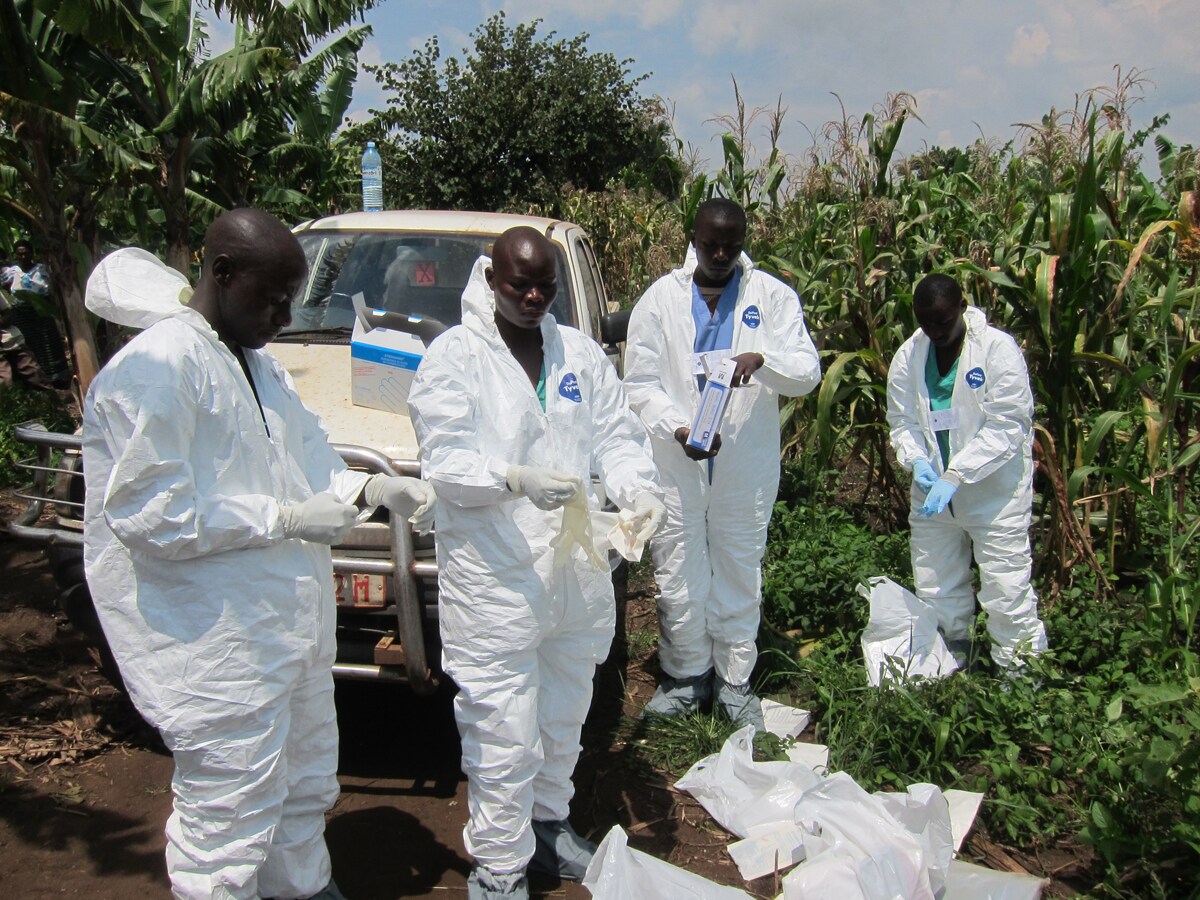
Uganda epidemiologists collect virus samples from the field, to test for deadly Ebola virus.
Photo: Justin Williams/CDC
According to an article in the Morbidity and Mortality Weekly Report (MMWR)released today by the Centers for Disease Control and Prevention (CDC), pilot projects between CDC and Uganda and CDC and Vietnam have resulted in improvements in disease detection and response that may serve as a model for increasing global health security in the rest of the world. Global health security – keeping the U.S. and the world safe and secure from infectious disease threats – is achieved by preventing, detecting and responding to outbreaks as early and effectively as possible.
During six months of intensive collaboration, CDC worked with Uganda’s Ministry of Health and Vietnam’s Ministry of Health to modernize diagnostic testing for high-risk pathogens, develop real-time information systems for faster outbreak response, and improve emergency operations procedures including safe packaging and transport of potentially infectious samples. Improvements include clinicians’ ability to report and track suspected high-risk pathogen cases by text message; expansion of specimen referral and transportation systems supported by the President’s Emergency Plan for AIDS Relief (PEPFAR); and confirmation of Zika virus, Crimean-Congo hemorrhagic fever virus, hepatitis E virus, meningococcal disease, yellow fever, and multidrug-resistant (MDR) and extensively drug-resistant (XDR) tuberculosis (TB) cases in Uganda
“The health security of the United States is only as strong as the health security of all nations around the world. We are all connected by the food we eat, the water we drink, and air we breathe,” said CDC Director Tom Frieden, M.D., M.P.H. “Stopping outbreaks where they start is the most effective and least costly way to prevent disease and save lives at home and abroad – and it’s the right thing to do. Progress in Uganda in less than a year shows how effective strategic investments can be.”

MMWR News Synopsis for January 30, 2014

MMWR News Synopsis for January 30, 2014


MMWR – Morbidity and Mortality Weekly Report

MMWR News Synopsis for January 30, 2014

Click here for the full MMWR articles.

1. CDC Grand Rounds: Reducing the Burden of HPV-Associated Cancer and Disease

HPV vaccines are safe and effective and should be routinely administered to 11- or 12-year-old boys and girls. These vaccines will prevent the significant burden of diseases and cancers caused by HPV. The Advisory Committee on Immunization Practices (ACIP) recommends that girls and boys aged 11 or 12 years be routinely vaccinated for HPV; vaccine may be given starting at age 9 years. Two vaccines, bivalent and quadrivalent, are available. Both vaccines prevent HPV 16 and 18, the types that cause cervical and other HPV-associated cancers. Quadrivalent vaccine also prevents HPV 6 and 11, the types that cause genital warts. National data currently show less-than-desired HPV vaccination among female adolescents aged 13–17 years. Improving vaccination coverage is important to reduce the substantial burden of cancer and disease caused by HPV.

2. Rapidly Building Global Health Security Capacity — Uganda Demonstration Project, 2013

HPV vaccines are safe and effective and should be routinely administered to 11- or 12-year-old boys and girls. These vaccines will prevent the significant burden of diseases and cancers caused by HPV. The Advisory Committee on Immunization Practices (ACIP) recommends that girls and boys aged 11 or 12 years be routinely vaccinated for HPV; vaccine may be given starting at age 9 years. Two vaccines, bivalent and quadrivalent, are available. Both vaccines prevent HPV 16 and 18, the types that cause cervical and other HPV-associated cancers. Quadrivalent vaccine also prevents HPV 6 and 11, the types that cause genital warts. National data currently show less-than-desired HPV vaccination among female adolescents aged 13–17 years. Improving vaccination coverage is important to reduce the substantial burden of cancer and disease caused by HPV.

3. Strengthening Global Health Security Capacity — Vietnam Demonstration Project, 2013

Pilot project in Vietnam has resulted in considerable systems improvements that may serve as a model for increasing global health security in other countries. Building on Vietnam’s existing health system capacity, CDC and partners worked with the country to increase its ability to test for emerging pathogens and manage public health emergencies. From March–September 2013, CDC collaborated with the Vietnamese Ministry of Health on a project to demonstrate that enhancements could be made to the country’s established health system capacity to enhance surveillance and early detection of and response to diseases and outbreaks. Achievements included enhanced ability to test for emerging pathogens, manage public health emergencies, and demonstration of the need and capability for information systems to improve public health emergency reporting. As a result, the region has greater global health security and Vietnam is closer to meeting WHO requirements for surveillance and response under the International Health Regulations (IHR).

4. Notes from the Field

Rotavirus Oral Vaccine Administration Errors — United States, 2006–2013.

Correction: MMWR News Synopsis for January 30, 2014

Correction: MMWR News Synopsis for January 30, 2014


Correction: MMWR News Synopsis for January 30, 2014

Corrected MMWR summary: 

2. Rapidly Building Global Health Security Capacity — Uganda Demonstration Project, 2013

By leveraging the existing health system capacity and enhancing laboratory and information systems through an improved Emergency Operations Center (EOC), Uganda strengthened its surveillance and response capabilities and is closer to meeting WHO requirements under the International Health Regulations (IHR). Since completing a global health security demonstration project in collaboration with CDC, Uganda has used its increased ability to identify and report suspected cases of priority diseases and to transport samples for analysis from remote locations. Analysis of samples has led to early detection of several disease threats including: West Nile virus, Zika virus, Crimean-Congo Hemorrhagic Fever virus, hepatitis E virus, Neisseria meningitides infection and tuberculosis (TB). Uganda also activated its improved EOC during a mass gathering for solar eclipse and to support international airport screening for illness consistent with Middle East Respiratory Syndrome Coronavirus infection among people returning from the Hajj. Strengthening every country’s capacity to prevent, detect, and respond to public health threats early and effectively is a global responsibility. From March to September 2013, CDC and the Uganda Ministry of Health worked collaboratively to improve the country’s disease detection and response capacity for priority infectious diseases that occur in Uganda, such as TB (including multi-drug resistant TB), cholera, and viral hemorrhagic fever caused by Ebola virus. The demonstration project strengthened Uganda’s public health laboratory system; enhanced communications and information systems for outbreak response; and developed a public health EOC – all essential elements for protecting global health security.

Centers for Disease Control and Prevention (CDC) Blog: Public Health Matters Update

Centers for Disease Control and Prevention (CDC) Blog: Public Health Matters Update


Centers for Disease Control and Prevention (CDC) Blog: Public Health Matters Update

Public Health Matters for Centers for Disease Control and Prevention (CDC). This information has recently been updated, and is now available.

Lessons from Atlanta
Atlanta’s thawing out, but what can we learn from this weeks snow disaster? Find out our top 5 lessons learned. http://blogs.cdc.gov/publichealthmatters/2014/01/lessons-from-atlanta/